The Habesha Kemis Guide
Styles, tibeb, occasions and how to choose the right traditional Ethiopian dress — from the two sisters behind Shema Wears.
What is a habesha kemis?
The habesha kemis (ሀበሻ ቀሚስ, also spelled habesha qemis) is the traditional dress of Habesha women — the peoples of the Ethiopian and Eritrean highlands. Kemis simply means dress. In Eritrea the dress is often called a zuria.
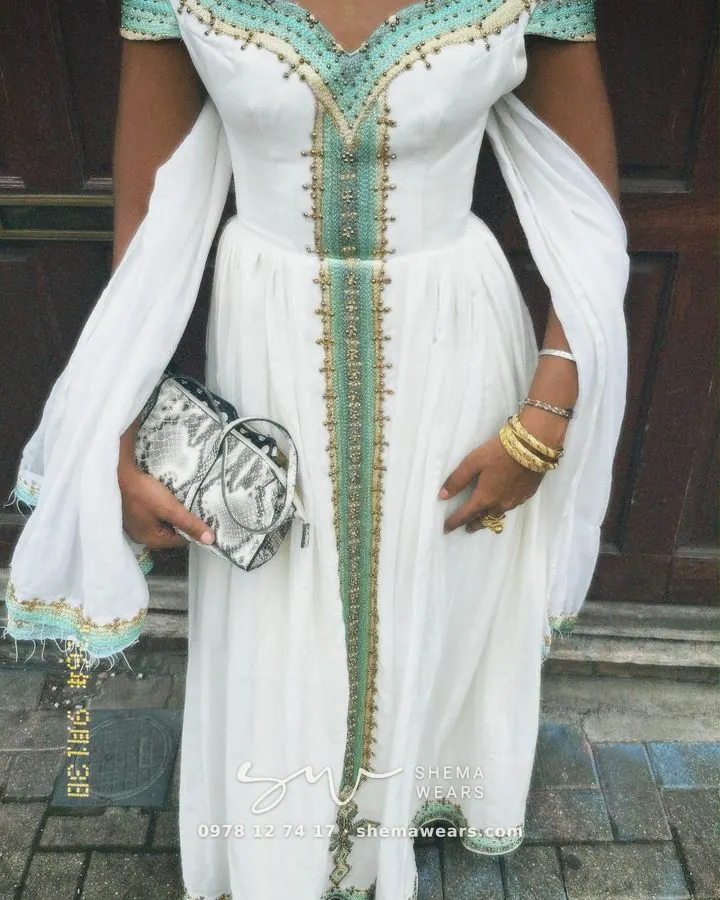
A classic habesha kemis is ankle-length, made of white or off-white cotton, and decorated with tibeb: bands of colourful woven or embroidered pattern at the neckline, down the front, at the cuffs and around the hem. It is almost always worn with a netela, a light cotton shawl edged with matching tibeb.
For many families, the kemis is far more than clothing. It is what you wear to church, to weddings, at the big holidays and on the days you want to remember — and good ones are kept, altered and passed on.

Shema, tibeb and netela
Shema (ሸማ) is the cotton cloth traditionally woven by hand on wooden looms in Ethiopia. It is soft, breathable and drapes beautifully, which is why it has been the fabric of the kemis for generations.
Tibeb (ጥበብ) means “art” or “skill” — and it is the soul of the dress. Patterns range from geometric diamonds and crosses to flowing floral work, in colours from classic gold to green, red, blue, bronze and soft pastels. The amount and placement of tibeb changes the whole character of a kemis: a slim border feels quiet and elegant; a fully worked bodice and deep hem is made for celebration.
The netela (ነጠላ) is the shawl worn over the shoulders or head. It is usually made of two layers of fine, gauzy cotton with tibeb at the ends or edges, and it is essential for church.
Traditional and modern styles
Traditional kemis styles vary from region to region — the cut, the tibeb motifs and the way the netela is worn all carry local meaning. Classic silhouettes are long and loose, with long sleeves and a tibeb panel down the front.
Today, many women want that heritage in a shape that feels like their own. Some of the modern styles we make at Shema Wears:
- Halter necklines — the bodice entirely in tibeb, open at the back. Striking for melse and evening celebrations. See our Bronze Tibeb Halter Habesha Kemis.
- Off-shoulder sleeves — tibeb framing the shoulders with a single panel running to the hem. Fresh and very photogenic. See our Mint Tibeb Off-Shoulder Habesha Kemis.
- Ballgown skirts — a fitted embroidered bodice and a full, swaying skirt with a deep tibeb hem, for brides and the bridal party. See our Sage Embroidered Habesha Kemis.
What to wear, when
Weddings and melse
Weddings are where the kemis shines. Brides often wear more than one look across the celebrations, and families and bridal parties increasingly coordinate tibeb colours. Guests can go bolder than everyday wear — this is the time for a fully worked bodice or a statement hem.
Holidays
Enkutatash (the Ethiopian New Year), Meskel, Genna (Christmas), Timket (Epiphany) and Fasika (Easter) all call for a kemis. White with a gold, green or multicolour tibeb is the classic choice, worn with a netela.
Church
Choose a modest cut with sleeves, or bring a netela to cover your shoulders and head. Lighter, simpler tibeb is perfect.
Graduations, engagements and photoshoots
Modern cuts in fresh tibeb colours — mint, sage, bronze — photograph beautifully and still feel rooted in tradition.
How to choose your kemis
- Start with the occasion. A wedding, a holiday and Sunday church each suggest a different amount of tibeb and a different cut.
- Pick your tibeb colour. Gold is timeless; green, red and blue are festive; bronze, sage and mint feel modern. If you are coordinating with a partner or bridal party, decide this together.
- Choose your silhouette. Classic long-sleeved, halter, off-shoulder or full ballgown — go with what makes you feel most like yourself.
- Get the fit right. A kemis should fit well at the bust and shoulders and fall to the floor in the shoes you’ll wear. If you’re between sizes, choose made-to-measure — our measurement guide shows you how.
- Give yourself time. Handmade pieces take time, especially before big holidays and wedding season. Order early and tell us your date.
Caring for your kemis
- Hand wash in cold water with a gentle detergent, or dry clean.
- Never wring — press water out gently with a towel.
- Dry flat in the shade so the tibeb keeps its colour.
- Iron on the reverse side at low heat and avoid ironing directly over embroidery.
- Store folded in a cotton bag, away from direct sunlight.
Ready to find yours?
Every Shema Wears kemis is handmade in our Addis Ababa studio, in your size or to your measurements.
Shop habesha kemis